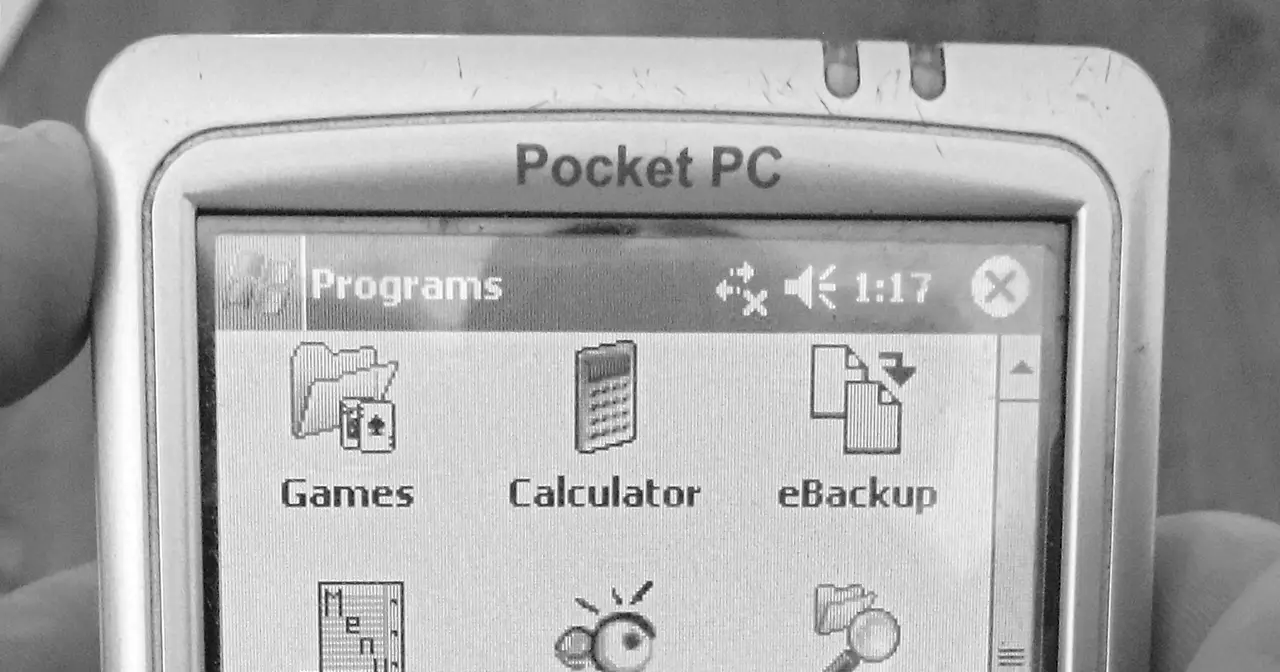
Before a single finger was enough to drive a phone, a whole generation carried a tiny computer with a stylus in their pocket. For years, Microsoft ruled that world with Pocket PC and, later, Windows Mobile. Today they are museum pieces, but in their day they defined what it meant to hold “a PC in the palm of your hand”.
From Windows CE to your pocket
It all began with Windows CE, an operating system Microsoft built from scratch for small, resource-constrained devices, very different from desktop Windows. Windows CE 3.0, from 1996, became the foundation for the early Handheld PCs, and on that kernel Microsoft built its family of PDA systems.
Unlike desktop Windows, CE was designed to run on ARM and MIPS processors, little memory and tiny screens. That technical heritage stayed with Microsoft’s mobile platform until its very last day.
Pocket PC: Microsoft’s PDA is born
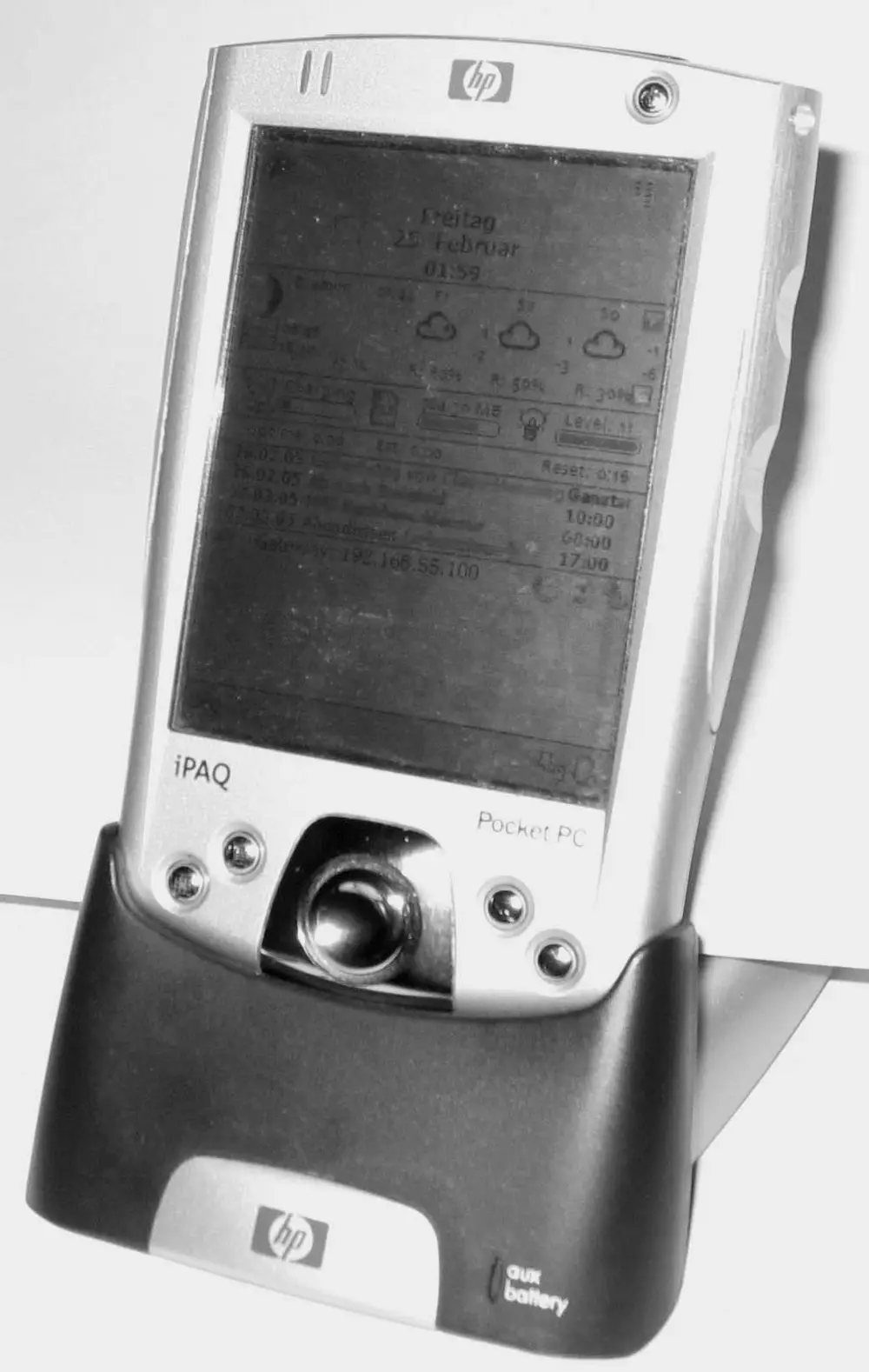
Pocket PC 2000, code-named “Rapier”, arrived on 19 April 2000 atop the Windows CE 3.0 kernel. These were keyboard-less electronic organizers, operated with a stylus on resistive 240×320-pixel screens. They shipped with cut-down versions of Word, Excel, Outlook and Internet Explorer. For the first time, Microsoft’s software fit in a pocket.
October 2001 brought Pocket PC 2002, code-named “Merlin”, which introduced the Smartphone category, a variant aimed at keypad-based phones. That marked the start of the PDA-and-phone convergence that would define the decade.
The rebrand: enter Windows Mobile
On 23 June 2003, Microsoft unified the entire family under a single name: Windows Mobile 2003. Now both PDAs and smartphones shared a brand and were explicitly tied to desktop Windows. This release improved connectivity a lot, adding Bluetooth management for keyboards, headsets and file beaming. March 2004’s Second Edition added support for landscape orientation and new screen resolutions.
The big leap came with Windows Mobile 5.0, launched in May 2005. Microsoft finally merged the two separate Pocket PC and Smartphone codebases into one. It required at least 64 MB of RAM and an ARM processor, and shipped with Office Mobile and Windows Media Player 10 Mobile pre-installed. Its most remembered feature, though, was push email via Exchange (Direct Push): corporate mail now landed on the phone instantly, something almost exclusive to BlackBerry at the time.
Maturity: Windows Mobile 6
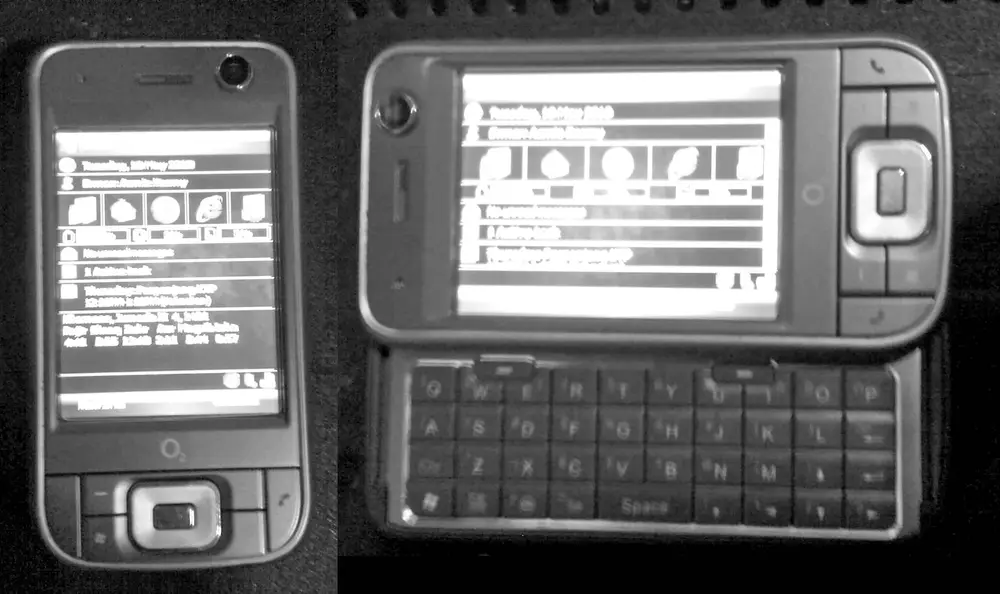
The Windows Mobile 6 branch, code-named “Crossbow”, shipped on 12 February 2007, barely a month after Steve Jobs unveiled the iPhone. It came in Standard (non-touch), Professional and Classic editions, and reworked the interface to resemble Windows Vista. 6.1 arrived in April 2008, and 6.5, in May 2009, was the first designed for finger use rather than the stylus, with its memorable honeycomb of icons.
It was a patch that came too late. While Microsoft was tweaking menus, macOS had already spawned iOS, and Google was pushing hard with a system built on the Linux kernel: Android.
The decline and the legacy
The numbers tell the fall. Gartner estimated that in the third quarter of 2009 Windows Mobile held 7.9% of worldwide smartphone sales; by August 2010 it had dropped to 5%, dead last, behind Symbian, BlackBerry, Android and iOS.
In 2010, Microsoft pulled the plug on the platform. It announced Windows Phone 7, released on 21 October 2010, with the tile-based Metro interface and a radical shift: capacitive screens instead of resistive, and goodbye to the stylus. The break was total. Windows Mobile apps were not compatible with the new system, orphaning developers and users overnight.
A telling curiosity: the original “Windows Mobile 7” project was cancelled in 2008 to start over with Windows Phone. Microsoft chose to burn years of work rather than drag a stylus-era architecture into the finger era. Another fun fact: many Pocket PCs ran on CompactFlash cards and synced to a PC through ActiveSync over a serial cable or a desktop cradle, a ritual unthinkable today.
Windows Mobile and Pocket PC were pioneers. They brought Office, a browser, email and multimedia to your pocket almost a decade before the iPhone. Their mistake was not technical but a matter of timing: they bet on the stylus just as the world discovered a finger was enough. Like so many historic systems, think of NeXTSTEP or BeOS and its heir Haiku, their greatest merit was clearing the path others would walk.