In August 1991 a 21-year-old Finnish student named Linus Torvalds posted a message to a Usenet group that would change computing forever. On 25 August, in the comp.os.minix newsgroup, he wrote the line now quoted in talks all over the world:
“I’m doing a (free) operating system (just a hobby, won’t be big and professional like GNU)…”
Spoiler: he was wrong about the “won’t be big” part. Three decades on, that hobby is arguably the most influential piece of software ever written.
Before Linux there was UNIX (and MINIX)
To see why Linux mattered, you have to look back. In the 1970s Bell Labs created UNIX, a powerful and elegant operating system that was also expensive and proprietary. For an ordinary student, studying it up close was nearly impossible.
In 1987 professor Andrew S. Tanenbaum released MINIX, an educational UNIX clone meant to teach how an operating system works on the inside. Torvalds ran it on his PC, powered by a freshly bought Intel 386, and soon ran into its limits. MINIX was built for teaching, not for daily use, and its license restricted what you could do with it. Fed up, Linus set out to write his own kernel from scratch. He wanted to call it “Freax”, oddly enough; it was Ari Lemmke, who ran the university FTP server, who uploaded it into a directory called “linux”. The name stuck, and there was no going back.
The kernel GNU was missing

Here comes a key piece that many people overlook. Since 1983, Richard Stallman and his GNU project had spent years building a complete free operating system: a compiler, editors, utilities, a shell… They had almost everything, except the central component: the kernel, the core that talks to the hardware and shares memory and the processor among programs.
Linux arrived just in time to fill that gap. That’s why, strictly speaking, what you run on your machine is GNU/Linux: Torvalds’s kernel surrounded by the GNU tools. It was a lucky combination, and the license locked it in. In 1992, with version 0.12, Linux adopted the GNU GPL, which requires sharing the source code of any improvement. That decision was the fuel for everything that followed: anyone could study it, improve it and redistribute it without asking permission.
From 0.01 to version 1.0
The real timeline of those early years is dizzying:
- September 1991: version 0.01 appears, uploaded to the university FTP. It was so early it couldn’t even boot on its own; it needed MINIX to compile.
- October 1991: version 0.02 lands, the first “official” version announced publicly.
- February 1992: version 0.12 introduces virtual memory and adopts the GPL.
- March 1994: Linux 1.0 is released, the first version considered fit for production, with roughly 176,000 lines of code.
The speed isn’t the only striking thing. It’s the model: Torvalds released the code and hundreds of programmers around the world mailed in patches. Linux was one of the first large projects built collaboratively and openly on a planetary scale.
From Slackware to Ubuntu: distributions are born
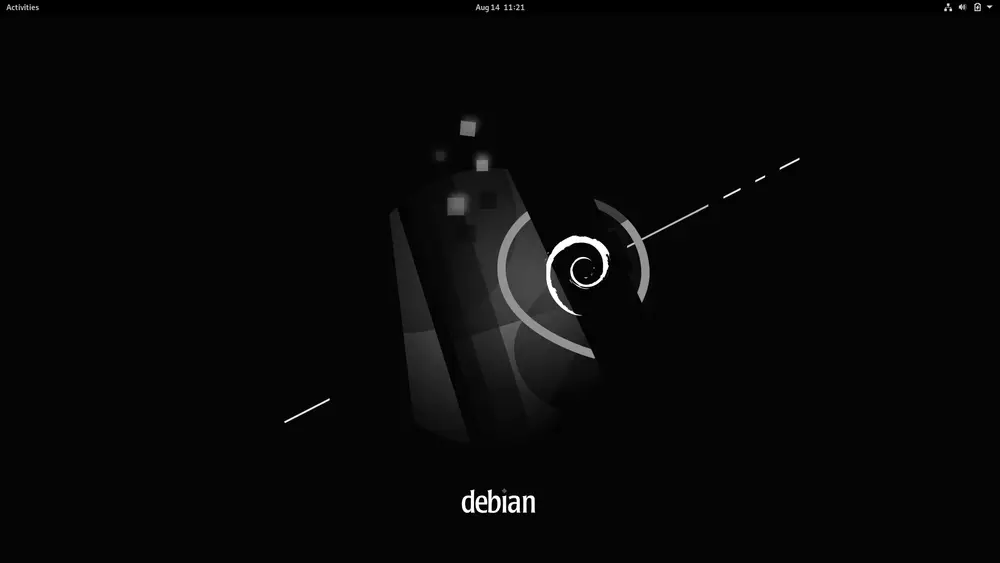
A kernel on its own isn’t much use to a user. The first distributions soon appeared, bundling the kernel with ready-to-install software. Slackware (1993) was one of the pioneers and is still alive today, faithful to its minimalist philosophy. That same year Debian was born, a community project that would become the foundation of much of what we use today.
Later came Ubuntu (2004), which took Debian’s rigor and wrapped it in something friendly for everyone, bringing Linux to home users. Today the catalog is huge and varied: Fedora as an innovation lab, Arch Linux for those who want full control, or Linux Mint for anyone after something comfortable from the first boot.
Git: Torvalds’s other great invention
In 2005 kernel development hit a crisis. The proprietary version-control system they were using, BitKeeper, pulled its free license after a dispute with the community. With no tool to coordinate thousands of developers, Torvalds did what he does best: he wrote it himself. In just a few days he created Git, which today is the absolute standard for version control across the whole software world. A kernel problem ended up handing the planet another of its most-used tools.
Where Linux is today
The kernel’s reach today is hard to overstate:
- 100% of the 500 most powerful supercomputers in the world (the TOP500 list) run Linux.
- The vast majority of servers and the infrastructure holding up the internet and the cloud.
- Android, based on the Linux kernel, powers billions of phones.
- Routers, TVs, cars, satellites and the International Space Station itself.
What started as “just a hobby” in a student’s bedroom in Helsinki ended up running, quite literally, a large part of the world. Not bad for a project its author thought “won’t be big”.