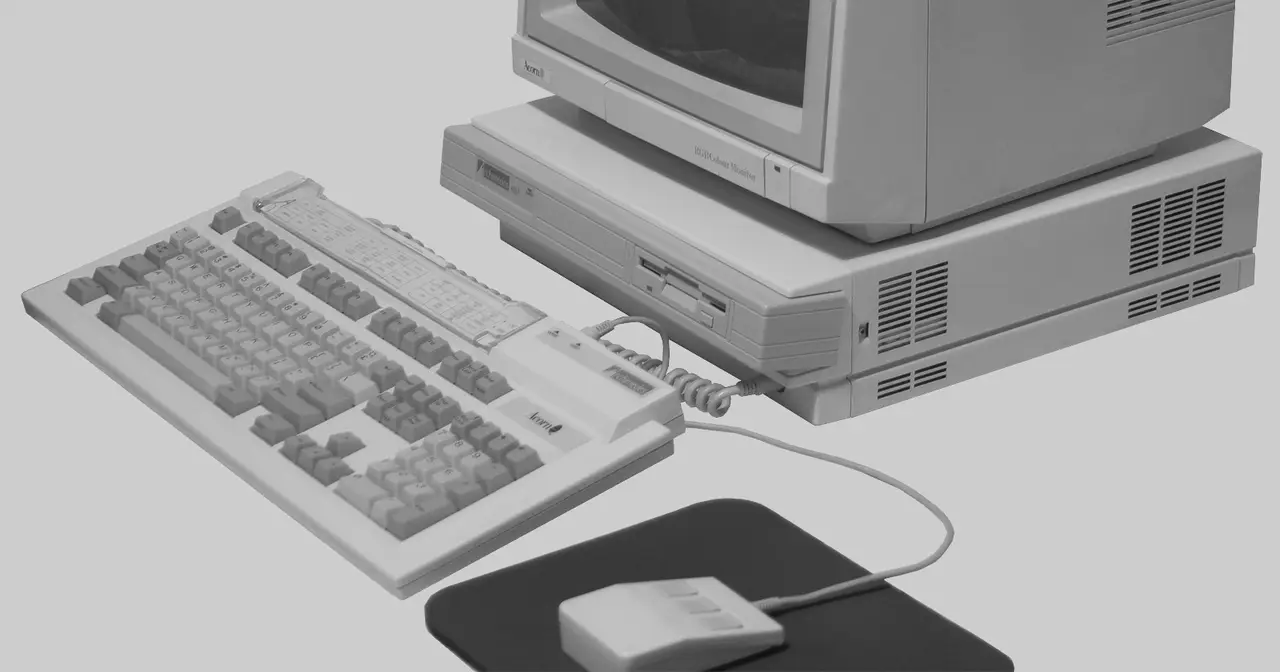
Few operating systems can claim to have inspired the most successful microprocessor architecture in history. RISC OS is one of them. It was born in 1987 inside Britain’s Acorn Computers as the software written for the Archimedes computers, the world’s first machines built around an ARM processor. Yes, the very same ARM that today beats inside your phone, your tablet and half the tech industry.
Acorn and the Birth of a Quiet Empire
Acorn Computers had triumphed in the 1980s with the BBC Micro, the reference educational computer in the United Kingdom. But the company wanted something faster and cleaner than the processors of the day, so its engineers designed their own chip based on the RISC philosophy (reduced instruction set computing): the Acorn RISC Machine, shortened to ARM.
To go with that hardware, Acorn needed an operating system. The original plan, a system called ARX, kept slipping hopelessly behind schedule. Faced with the risk of shipping the computer without software, management turned to the Acornsoft team to improvise an alternative under an absurd deadline of barely five months. That is where the project’s codename came from: Arthur, which according to legend stood for “A Risc by THURsday.”
From Arthur to RISC OS 2 and 3
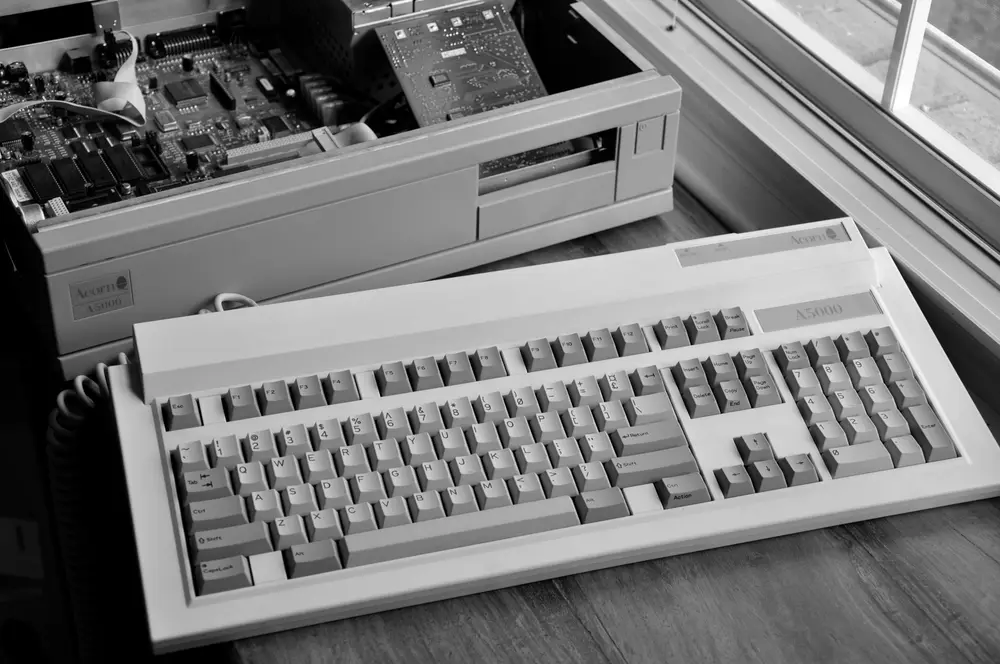
The first version, Arthur, shipped in 1987 alongside the Archimedes family and its 8 MHz ARM2 processor. When Acorn prepared the second generation, it renamed the system to avoid confusion with the film Arthur 2, starring Dudley Moore. That gave us RISC OS 2, completed in 1988 and put on sale in April 1989.
RISC OS 3 arrived in 1991 alongside the A5000 computer, bringing more mature cooperative multitasking, better font handling and a more polished desktop. By then the system had already won over much of Britain’s schools, loyal to Acorn since the BBC Micro days.
The Risc PC, RISC OS 4 and Acorn’s Break-Up
In 1994 came the powerful Risc PC with an ARM6 processor and RISC OS 3.50. Its architecture was so different that this version could not run on the old Archimedes machines. The system was at its peak: by 1996 it had shipped on more than 500,000 computers.
But the Windows-compatible PC market was steamrolling everything, and in January 1999 Acorn officially halted development and renamed itself Element 14. The story did not end there. The company RISCOS Ltd licensed the rights and launched RISC OS 4 in July 1999, continuing the development branch of the classic system. Its rivals on the desktop included giants like Windows and the Unix-derived macOS that would soon take over.
RISC OS 5 and the Open-Source Era
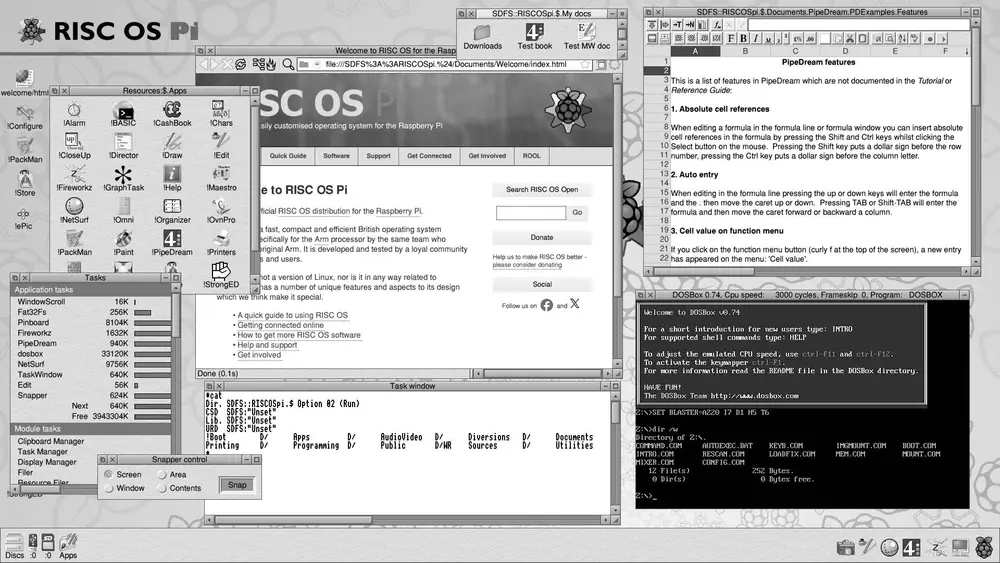
In October 2002, Castle Technology unveiled RISC OS 5 on its Iyonix PC. This version grew out of parallel work (NCOS) done by Pace for television set-top boxes, which opened a curious schism: for years two distinct lineages of the system, 4 and 5, coexisted side by side.
The decisive turn came later. In 2006 a shared-source licence was announced through RISC OS Open Ltd (ROOL), and in 2018 RISC OS Developments acquired the rights and relicensed RISC OS 5 under the permissive Apache 2.0. Today the system runs on modern hardware such as Raspberry Pi boards, keeping alive a project with nearly four decades of history.
Curiosities Few People Know
The history of RISC OS is full of delightful anecdotes. Richard Manby wrote the original desktop in BASIC as a mere demonstration of the window manager. That demo escaped into the real world and ended up burned directly into the computer’s ROM, becoming the definitive desktop almost by accident.
Another quirk is its WIMP interface, with an icon bar at the bottom of the screen that strongly resembles the macOS Dock, and a three-button mouse named Select, Menu and Adjust. Because the system lived in ROM, the computer booted almost instantly and was practically immune to software corruption, a virtue that systems like BeOS/Haiku and AmigaOS chased in their own ways too.
More than thirty-five years later, RISC OS is still alive, free and maintained by a loyal community. Not a bad legacy for a system that was born racing against the clock and that, along the way, gave birth to the processor that now moves the world.