Few operating systems capture the phrase “technically superior, but lost the war” as neatly as OS/2. Built to dethrone MS-DOS and become the future of the PC, it ended up as one of computing’s great missed opportunities. This is its story.
An alliance of giants
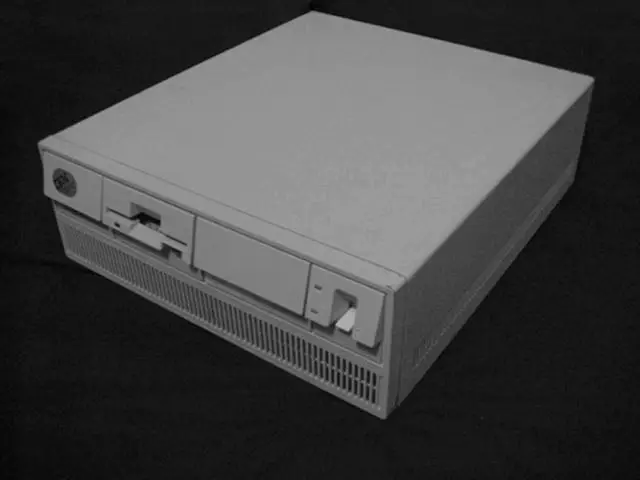
OS/2 (Operating System/2) came out of a collaboration between IBM and Microsoft, led by IBM software designer Ed Iacobucci. The goal was ambitious: a modern successor to PC-DOS that could really exploit Intel processors and drop the limits of old DOS.
The first version shipped in 1987, tied to IBM’s PS/2 hardware line. That OS/2 1.0 ran in protected mode and offered true multitasking, something early versions of Windows couldn’t dream of. In 1988, version 1.1 arrived with Presentation Manager, its graphical interface.
The divorce that changed everything
The relationship between the two companies started to sour around 1990. The unexpected success of Windows 3.0 made Microsoft rethink its priorities: why push OS/2 if Windows was selling itself? A disagreement over how to position OS/2 against Windows 3.1 finally broke the alliance apart.
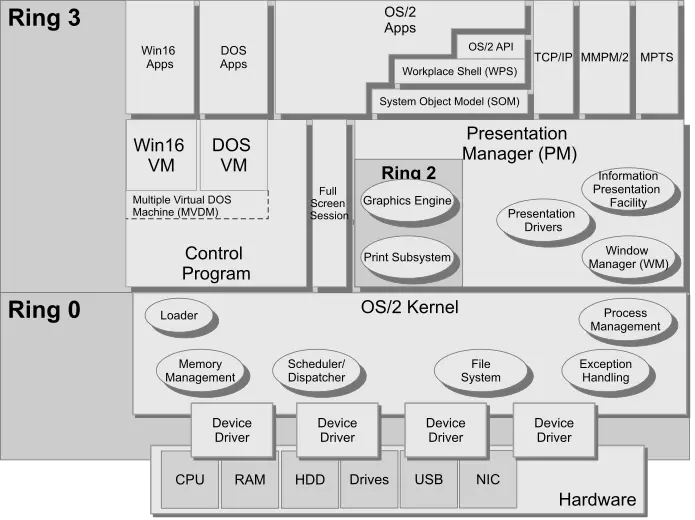
From then on, IBM went solo. The result was OS/2 2.0, released in 1992: the first fully 32-bit version and the first developed entirely by IBM. It was an impressive piece of engineering, able to run DOS apps, Windows 3.x apps, and native OS/2 software all at once, with its famous tagline “a better DOS than DOS, and a better Windows than Windows”.
The Warp era
1994 brought the version most people remember: OS/2 Warp 3. With it, IBM went after home users for the first time, through a multi-million-dollar advertising campaign. Warp featured built-in Internet connectivity, very advanced for the time, and was sold on its ability to squeeze every megabyte of RAM.
Two years later, on September 26, 1996 (codenamed Merlin), came OS/2 Warp 4. It added speech recognition, Java support, and a more polished interface. It was the last major upgrade: after that, IBM slowly wound the product down, though it kept releasing maintenance versions until 2001.
Why it lost the desktop battle
For all its robustness, solid multitasking, and legendary stability, OS/2 never won mass-market share. Several things hurt it: demanding, pricey hardware, a thin library of native applications, Microsoft’s commercial muscle, and the irony that OS/2 ran Windows apps so well that many developers saw no reason to port anything.
While Windows 95 swept store shelves, OS/2 was pushed into niches where reliability mattered most: ATMs, banking, transport ticketing systems. For years, countless cash machines around the world quietly ran on OS/2. Its conceptual rival in stability would, years later, become the Linux ecosystem, though by very different routes.
Real curiosities
- OS/2’s Workplace Shell was one of the first object-oriented desktops on the market, with a level of customization that amazed anyone coming from DOS.
- A large Moscow bank needed to run OS/2 on new, unsupported hardware; rather than migrate, it hired a team of Russian developers to write a hypervisor that would officially support the system.
- OS/2 boasted of being “a better DOS than DOS”: it often ran DOS programs more stably than MS-DOS itself, thanks to its isolated DOS virtual machines.
Life after IBM
OS/2 never quite died. After IBM dropped it, two companies kept the flame alive under license. First Serenity Systems, which distributed it as eComStation from 2001 to 2011. And since 2017, Arca Noae LLC has sold it as ArcaOS, based on OS/2 Warp 4.52, with support for modern hardware, bug fixes, and new tools.
Today OS/2 is a cult favorite among lovers of computing history, alongside other era-defining systems like AmigaOS and NeXTSTEP. A brilliant bet that arrived too early, with the wrong partner at its side, at the least opportune moment.