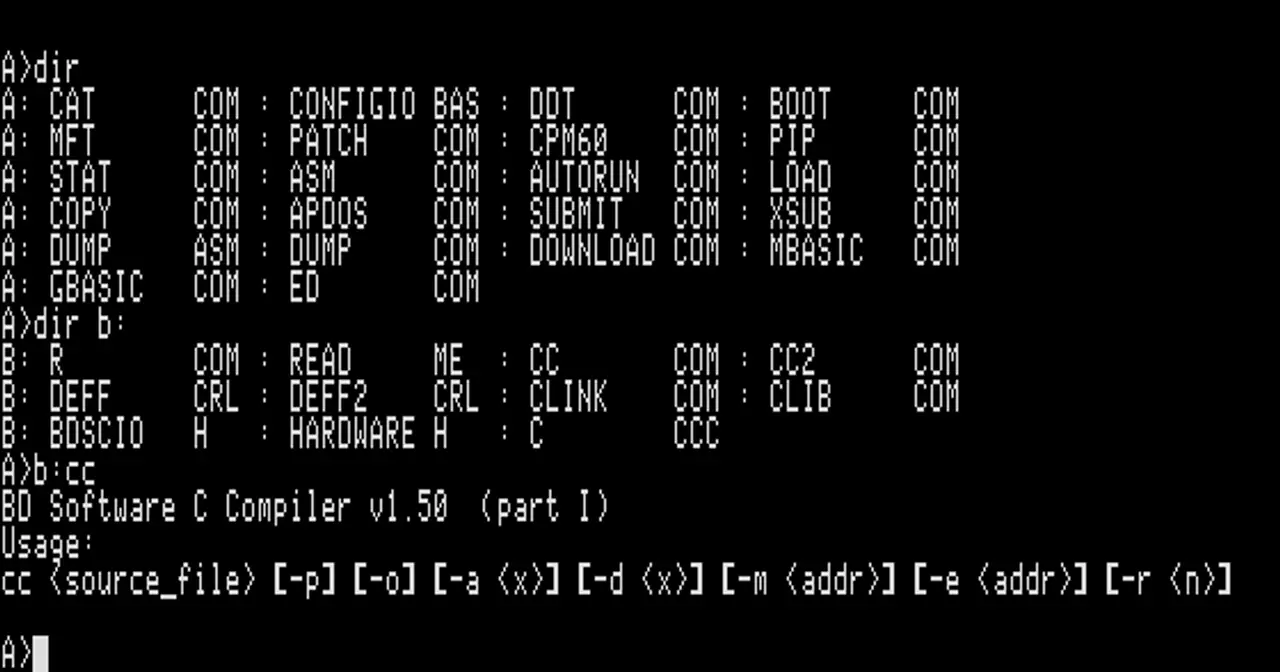
Before Windows covered every desk, and even before MS-DOS became a byword for the personal computer, one operating system ran the world of microcomputers: CP/M. For much of the late 1970s and early 1980s, if you bought an 8-bit machine to get real work done, chances are it booted into CP/M. Here is the story of where it came from, the versions that mattered, and the famous anecdote that redirected the course of computing.
The Origin: Gary Kildall and a 1974 Prototype
CP/M stands for Control Program for Microcomputers, and it came from the mind of Gary Kildall, an American computer scientist who at the time taught at the Naval Postgraduate School in Monterey. In 1974, in Pacific Grove, California, Kildall showed off the first working prototype of his system. He had written it for Intel 8080 microprocessors using PL/M, a language he had designed for Intel himself.
His great technical insight was to peel the hardware-dependent part of the system away from the rest. He named that layer the BIOS (Basic Input/Output System), and it let the same CP/M run on machines from wildly different manufacturers by adapting only a handful of drivers. The idea still echoes inside every modern computer.
Digital Research: From Hobby to Industry Standard
To sell the invention, Kildall and his wife Dorothy founded a company with the grandiose name Intergalactic Digital Research, soon shortened to the more sober Digital Research, Inc. (DRI). They started out advertising in hobbyist magazines, but the business grew at a breakneck pace: by September 1981, Digital Research had sold more than 250,000 CP/M licenses.
Portability was the key. CP/M became the system offered by pioneering manufacturers such as Altair, Amstrad, Kaypro, and Osborne. Pairing CP/M with S-100 bus computers patterned on the MITS Altair gave professional microcomputing its first de facto standard.
How It Worked Under the Hood
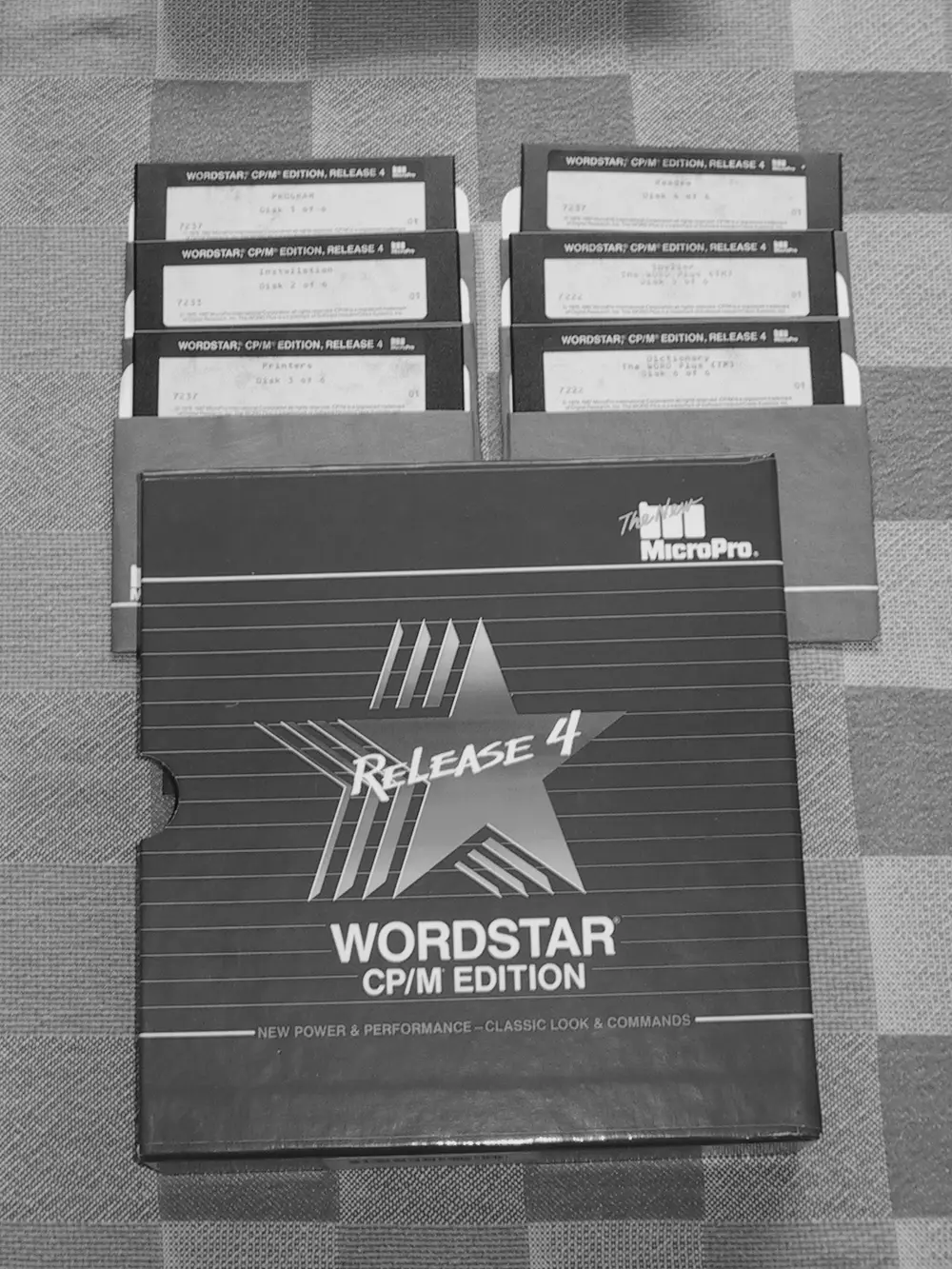
CP/M was split into three pieces worth knowing. The BIOS held the hardware drivers. The BDOS (Basic Disk Operating System) implemented the file system and provided services to applications. And the CCP (Console Command Processor) was the command interpreter the user talked to. The BIOS and BDOS stayed resident in memory, while the CCP could be overwritten by a program and reloaded automatically when that program finished.
Real bestsellers flourished on top of this architecture. The word processor WordStar and the database dBASE, two of the most influential programs of the era, were both written for CP/M first.
The Versions: From CP/M-80 to CP/M-86
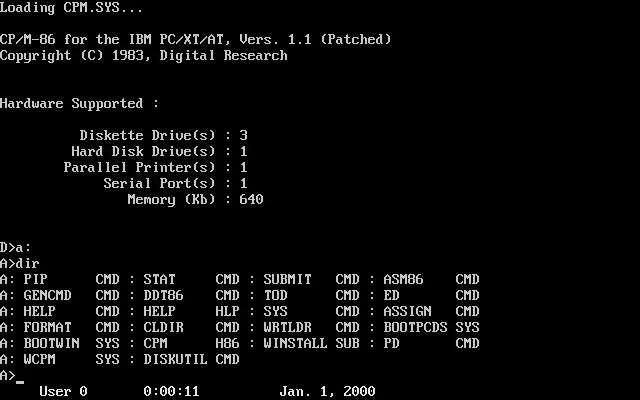
The original 8-bit CP/M came to be known, in hindsight, by the retronym CP/M-80, to set it apart from what followed. Digital Research also released MP/M, a multi-user, multitasking variant, and in November 1981 it introduced CP/M-86, the first version for Intel’s 16-bit 8086 processors. MP/M-86 would later evolve into Concurrent CP/M-86, pushing the system toward true multitasking.
CP/M-86 was expected to be the operating system of the new IBM PC. But something went wrong.
The Anecdote That Changed Everything: “Gary Went Flying”
When IBM went looking for an operating system for its PC in 1980, it turned to Digital Research. Popular legend has it that the IBM executives arrived at DRI’s offices and Kildall was off flying his plane, letting the opportunity slip away. Bill Gates summed up the episode in three words, “Gary went flying”, which became Microsoft’s internal shorthand for a missed opportunity.
The reality was more nuanced. Kildall was indeed flying, but he was delivering software to a customer, and he was back that same afternoon. The real sticking point was business: IBM wanted to pay a flat fee for the rights, and Kildall could not grant that because of favored-nation contracts with earlier customers. IBM ultimately turned to Microsoft, which adapted 86-DOS from Seattle Computer Products and shipped it as PC DOS.
Even so, CP/M-86 was eventually offered as an option for the IBM PC after legal pressure from DRI. It never caught on. IBM priced it at around $240 against just $40 for PC DOS. Price sealed CP/M’s fate.
The Legacy of CP/M
Many concepts in early MS-DOS strongly echoed CP/M: nearly identical file-handling data structures and the habit of naming drives with letters (A:, B:…). That kinship made it easy to port WordStar and dBASE into the new DOS world. CP/M’s lineage reached forward into later systems like DR-DOS, and its philosophy of portability lives on in free projects such as FreeDOS. You can revisit the system today on the CP/M page and tinker with emulators that keep the spirit of the first personal-computer revolution alive.