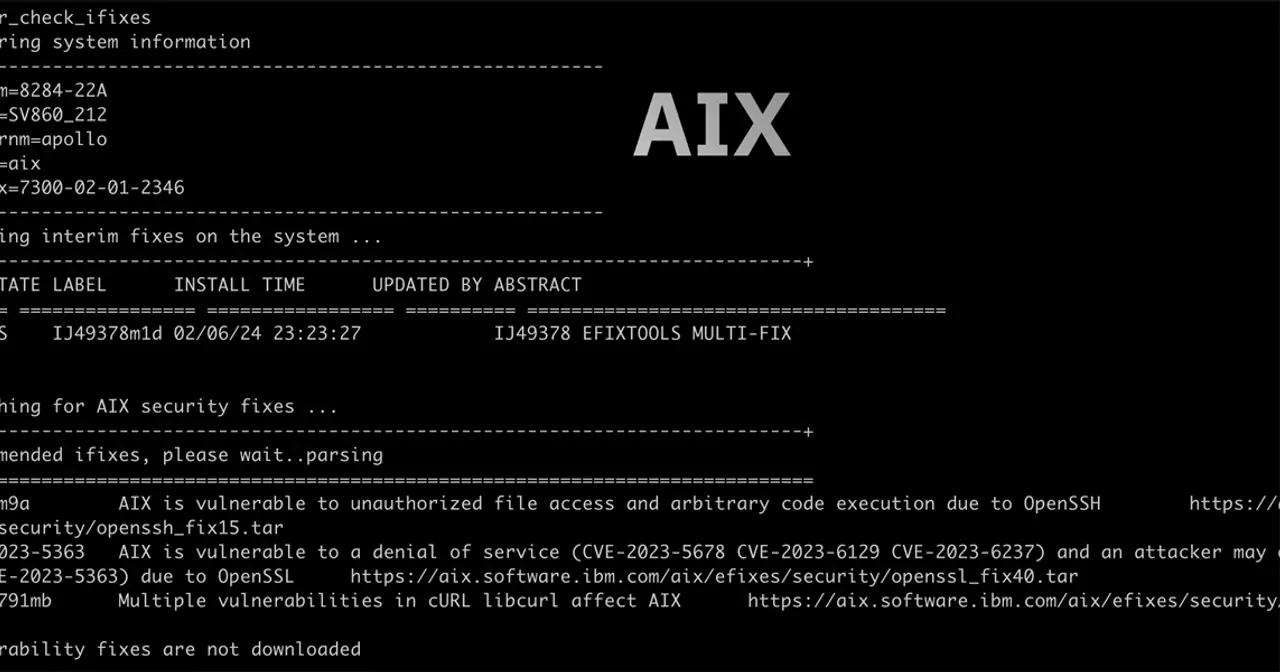
When people talk about Unix, they usually think of free systems like FreeBSD or the ubiquitous Linux kernel. Yet much of the enterprise world still runs on proprietary Unix variants born decades ago. AIX, IBM’s Unix, is one of the most remarkable survivors: it has been around since 1986 and still powers banks, insurers and large data centres today.
What AIX Is and Where It Came From
AIX stands for Advanced Interactive eXecutive. It is a family of proprietary Unix operating systems developed and sold by IBM since 1986. Its technical foundation blends UNIX System V with 4.3BSD-compatible extensions, a common recipe for the commercial Unix systems of that era.
The first release, AIX Version 1, arrived in 1986 for the IBM 6150 RT workstation (the RT PC), a pioneering machine because it used the ROMP microprocessor, one of the first commercial RISC chips in the world. According to its developers, the original AIX source ran to about a million lines of code, incorporating System V Releases 1 and 2 alongside contributions from 4.2 and 4.3 BSD.
From the RT PC to the POWER Platform

The decisive leap came in 1990 with AIX Version 3, designed for the new RS/6000 platform built around POWER processors. This release is historically important: it was one of the first operating systems to introduce a journaling file system (JFS), a technology we now take for granted that protects data integrity after a power loss. It also popularised shared libraries, shrinking binary sizes and reducing memory and disk usage.
In 1994 came AIX Version 4, which added symmetric multiprocessing (SMP) and matured throughout the 1990s, culminating in AIX 4.3.3 in 1999. From then on, AIX cemented its position as the reference Unix for high-end enterprise servers.
SMIT: Administering Unix Without Memorising Commands
One of AIX’s signature features is SMIT (System Management Interface Tool). At a time when administering Unix meant mastering dozens of commands and hand-editing config files, SMIT offered interactive menus to manage users, disks, networks or software packages. The clever part is that SMIT never hides what it does: it displays and logs the commands it runs underneath, so administrators can learn from the tool and then automate those same tasks in scripts. In a sense, it was an idea well ahead of its time.
AIX 5L, Project Monterey and Linux Affinity
In the early 2000s, IBM tried to take AIX beyond POWER. Under the banner of Project Monterey, IBM and the Santa Cruz Operation worked on a multiplatform Unix for Intel’s Itanium (IA-64) architecture. A beta of AIX 5L for IA-64 was released in 2001, but the project was cancelled in 2002 for lack of market interest: barely a few dozen licences were ever sold.
The “L” in AIX 5L referred precisely to Linux affinity. IBM bundled a Toolbox for Linux Applications that let users run open-source software, including the KDE and GNOME desktop environments, on top of AIX. It was a nod to Linux’s growing influence over rival Unix systems of the time such as Solaris.
AIX Today
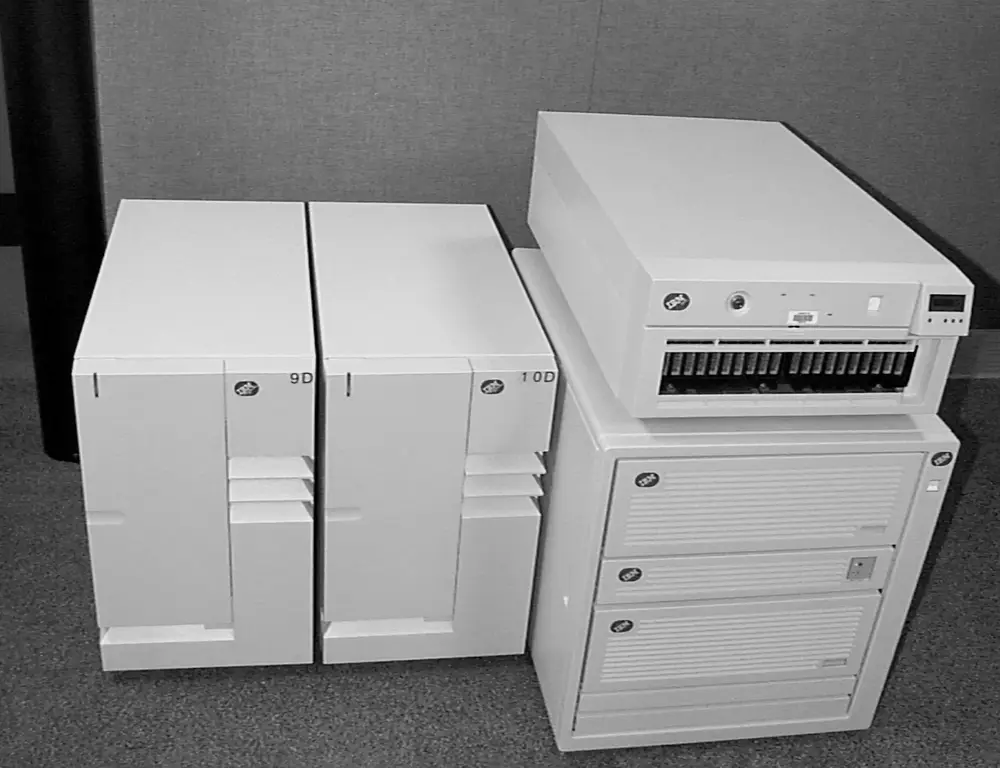
Far from retiring, AIX keeps shipping new releases. AIX 7.3 launched on 10 December 2021 with native support for POWER9 and POWER10 processors, and has continued to be updated through successive Technology Levels. This longevity — more than three and a half decades in active service — makes AIX one of the most durable commercial Unix systems in history, in a league apart from more experimental projects like Plan 9 or the academic MINIX.
Curiosities
- The earliest AIX releases installed from eight 1.2 MB floppy disks. Today a single phone photo is larger than that entire operating system.
- AIX prides itself on being one of the first systems with journaling, a feature that would take years to reach the Linux and BSD worlds.
- Don’t confuse AIX with IBM i (formerly OS/400): they are two distinct systems that coexist on the same POWER hardware.
- Despite being proprietary, AIX embraced free software early through its Toolbox, proving that no commercial Unix could ignore the open-source wave.