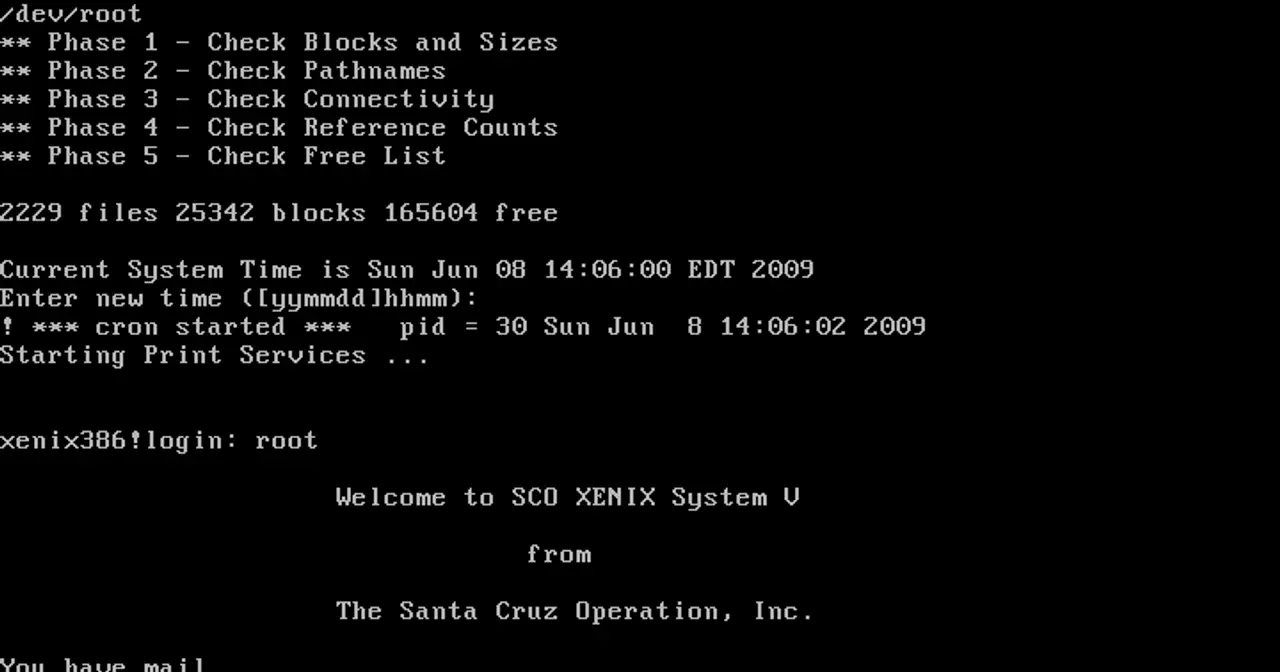
Today we associate Microsoft with Windows, but there was a time when Bill Gates’ company bet heavily on Unix. That system was called Xenix, and for much of the 1980s it was, surprisingly, the most widespread Unix variant in the world. This is the story of an almost-forgotten operating system that nonetheless helped lay the foundations of the PC industry.
When Microsoft Wanted to Be a Unix Company
In the late 1970s, Microsoft was still a small company focused on programming languages. In 1980 it took an ambitious step: it licensed Unix directly from AT&T, its original creator at Bell Labs. Because AT&T did not allow third parties to use the “Unix” trademark at the time, Microsoft branded its version with a name of its own: Xenix.
The first release was based on Version 7 Unix (1979), the classic Bell Labs codebase. Bill Gates’ strategy was clear: he was convinced Unix would become the standard operating system for personal computers as soon as the hardware grew powerful enough. Microsoft even advertised Unix as “the microcomputer operating system of the future.”
MS-DOS and Xenix: Two Parallel Paths
Here lies one of the era’s great curiosities. For years Microsoft maintained two operating systems side by side: MS-DOS, which the company itself described as “single-user, single-tasking,” and Xenix, its multiuser, multitasking option. The marketing message was blunt: if you wanted to run several tasks or serve multiple users at once, you bought Xenix.
Microsoft did not sell Xenix to end users directly. Instead it licensed the system to hardware makers (OEMs) so they could adapt it to their machines. That decision explains why Xenix ended up running on a remarkably wide range of very different computers.
The Versions and the Major Ports
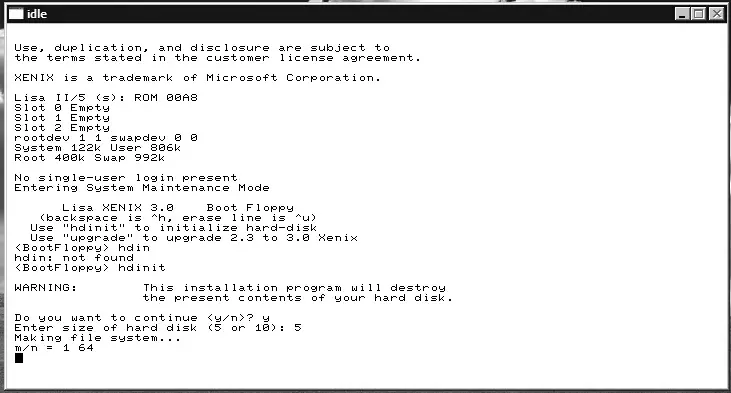
Xenix was never a single system but a family that evolved over time:
- Xenix 1.0 / 2.x: based on Version 7 Unix. The first 8086 port targeted the computers of Altos Computer Systems, with first customer shipments in early 1982.
- TRS-XENIX: in early 1983, Tandy made Xenix the default operating system for its Motorola 68000-based TRS-80 Model 16. Tandy more than doubled the installed base of Xenix and became the largest Unix vendor in 1984.
- Xenix 3.0: upgraded to the UNIX System III codebase. The IBM PC port, released by SCO in September 1983, corresponded to Xenix 3.0.
- Xenix 2.0 (1985): now based on UNIX System V, the dominant commercial Unix standard of the time.
The version for the 80286 processor took advantage of protected mode and the memory management unit built into that chip, something quite advanced for its day. In 1986 it was ported to the 80386, Intel’s first 32-bit processor.
The Handover to SCO and the End of the Xenix Name
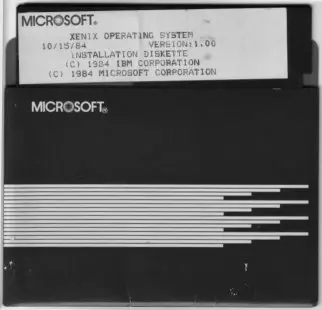
Microsoft never wanted to compete head-on with AT&T in the Unix market, so it soon stopped developing Xenix on its own, even as it kept selling it. Many of the ports were developed jointly with the Santa Cruz Operation (SCO), a company in which Microsoft held a stake.
In 1987, Microsoft transferred ownership of Xenix to SCO. In exchange, it retained slightly less than 20% of SCO’s shares. The California company resumed development and continued releasing new versions until 1991. The last was SCO Xenix/386 System V R2.3.4. In parallel, SCO developed its own i386 Unix, SCO UNIX, released in 1989, which eventually superseded Xenix. That lineage feeds, in part, later systems such as the multiuser side of OS/2 and the entire commercial PC Unix ecosystem.
Why Xenix Still Matters
In the mid-to-late 1980s, Xenix was the most common Unix variant in the world, installed on more machines than any other. It proved that Unix could run on modest microcomputer hardware, paving the way for Linux and the BSDs to later bring that same idea to the masses, freely and at no cost.
The final paradox is delicious: the company that today dominates the desktop with Windows was, for nearly a decade, one of the largest Unix distributors on the planet. If these pioneering systems interest you, take a look as well at Solaris and AIX, direct heirs of that commercial Unix tradition.