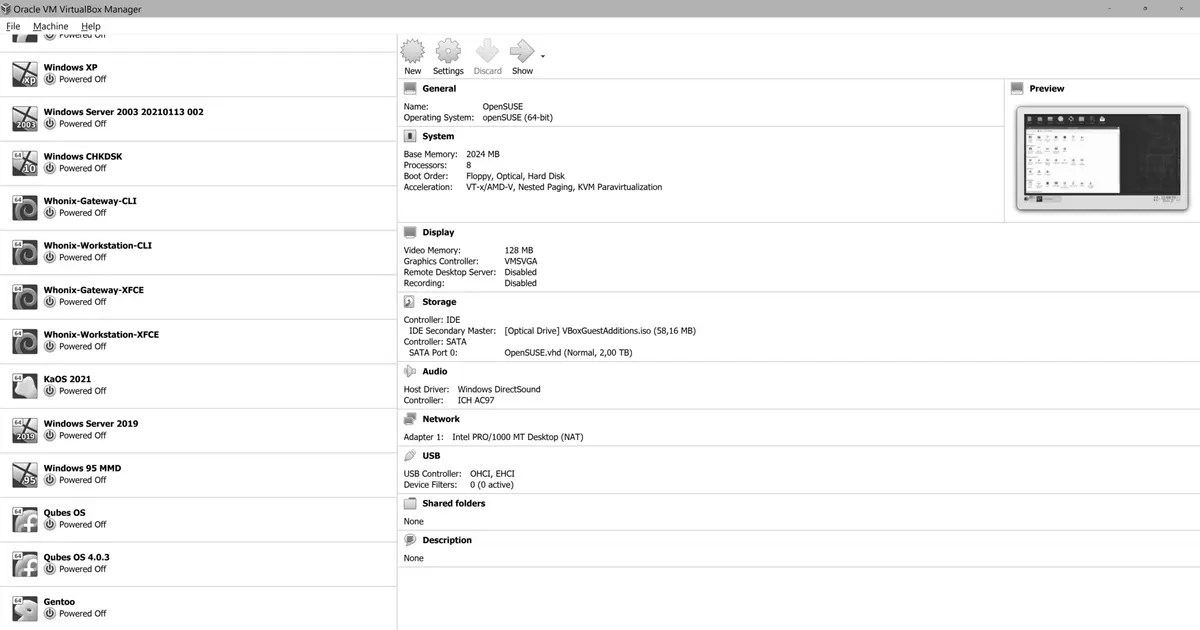
Oracle has released VirtualBox 7.2.10, the fifth maintenance update to the 7.2 series of its free, cross-platform virtualization software for Linux, Solaris, macOS, and Windows. It arrives almost two months after VirtualBox 7.2.8.
The headline change is initial support for the Linux 7.1 kernel series, which Linus Torvalds released on June 14. If you build the kernel modules against 7.1, this version now recognizes them. The release also improves support for the Red Hat Enterprise Linux 9.8 kernel and refines compatibility with Linux 7.0.
What it brings for Linux hosts and guests
Beyond kernel support, VirtualBox 7.2.10 adds two changes worth knowing about:
- You can now build the source code with NASM instead of YASM as the assembler.
- It adds initial support for the Extended Data Control Protocol for KDE Plasma when sharing the clipboard on Wayland guests. That’s a first step toward smoother copy-paste between host and guest under Wayland, where the clipboard has always been a tricky spot.
On the fix side for Linux, this version resolves a problem that broke kernel module builds with the openSUSE Leap 16.0 kernel, and fixes, on Linux hosts only, a bug that kept virtual machines from starting because of a kernel oops.
Boot and device fixes
The bug-fix list targets very specific cases that hit real users:
- CentOS Stream 10 virtual machines that failed to boot with the
Fatal glibc error: CPU does not support x86-64-v3message. - A boot issue on ARM virtual machines assigned less than 1 GB of RAM.
- Shared Folders automount and clipboard sharing failures on OS/2 guests.
- The inability to attach USB devices to a headless virtual machine on Apple Silicon systems running macOS 26.4.1.
- VIRTIO-SCSI devices that the guest did not recognize as an SSD.
- Two network problems tied to the E1000 emulation code.
Who should care
If you run VirtualBox on a Linux host that already runs, or will soon run, the 7.1 kernel, this update is the one you were waiting for: without it, the modules won’t build against the new kernel. It’s also worth grabbing if you work with OS/2 guests, low-RAM ARM machines, CentOS Stream 10, or Wayland setups with KDE Plasma, since it clears bugs that broke day-to-day use.
The download is available from the official website as installers for several Linux distributions, plus Solaris, macOS, and Windows. Remember to update the VirtualBox Extension Pack too for the full experience. The official changelog has the full list of changes.