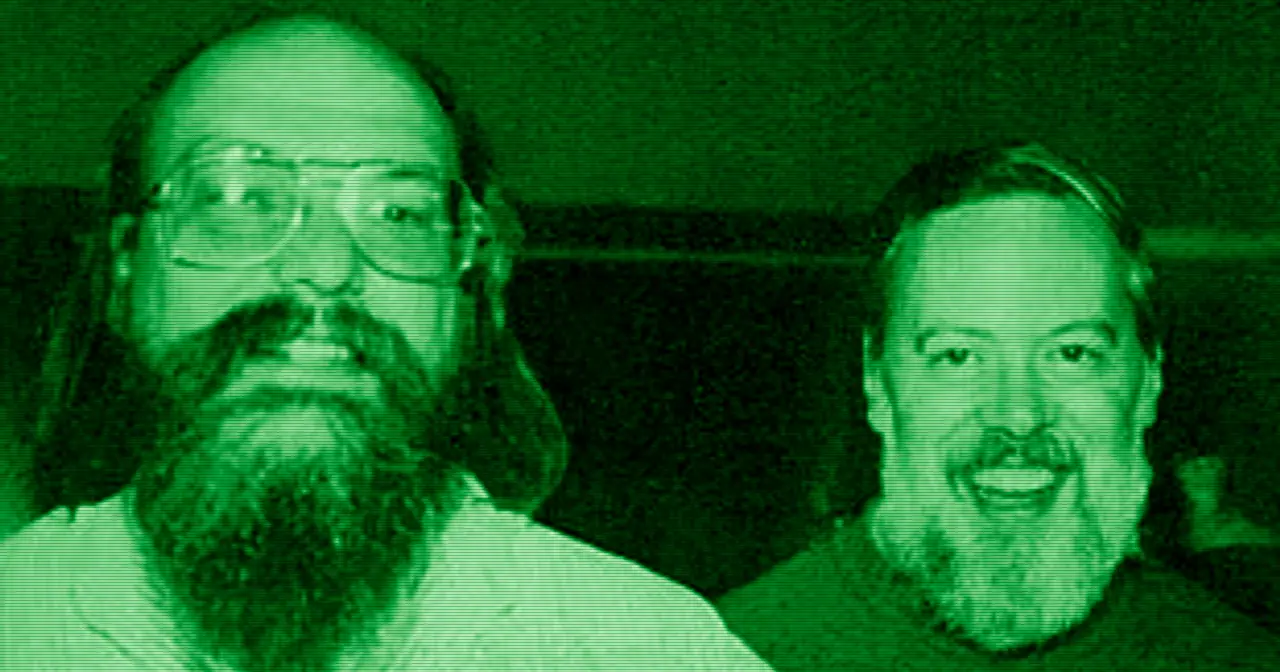
Few programs have done so much with so few lines of code. The Research Unix that Ken Thompson and Dennis Ritchie built at AT&T’s Bell Labs during the 1970s is the common ancestor of nearly every serious operating system we still use. Two releases in particular, the Sixth Edition (V6, 1975) and the Seventh Edition (V7, 1979), marked the moment Unix stopped being an in-house experiment and became a worldwide phenomenon.
Bell Labs and the Origins
Unix was born in the late 1960s at Bell Labs, AT&T’s research arm, as a reaction to the failure of the overambitious Multics project. Thompson, Ritchie and a handful of colleagues wanted something simple, elegant and genuinely useful to themselves. The breakthrough came when Ritchie rewrote much of the system in the C language, his own creation. For the first time an operating system could move from one machine to another without being rewritten entirely in assembly.
The earliest editions circulated only inside AT&T. The Fifth Edition was licensed to educational institutions, but the next release threw the doors wide open.
V6 (1975): Unix Goes Public
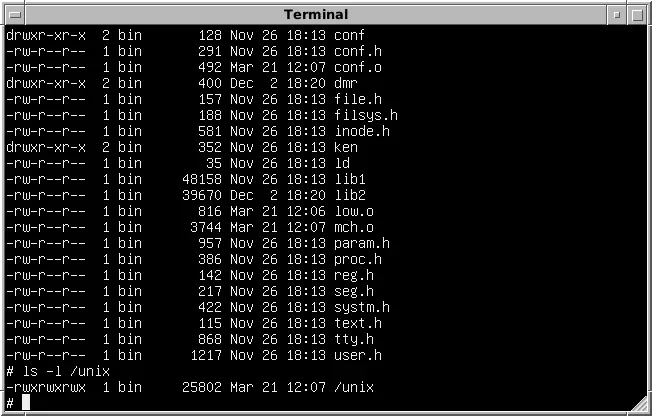
Released in May 1975, the Sixth Edition was the first version of Unix to see wide distribution outside Bell Labs. AT&T licensed it to universities for around $200 and to commercial users for a staggering $20,000, a price meant to scare companies off. Even so, V6 became the most widely used version well into the 1980s.
It targeted Digital Equipment Corporation’s PDP-11 minicomputers. Its great historical feat arrived in 1977, when Richard Miller and Ross Nealon at the University of Wollongong in Australia ported it to the Interdata 7/32. This was the first Unix to run on something other than a PDP, proving in practice that a portable operating system written in C was feasible. That lesson in portability is exactly why Linux and FreeBSD can run on phones, servers and supercomputers alike today.
The Lions Commentary: The Most Beloved Bootleg
V6’s most famous curiosity is a teaching tool. John Lions, a professor at the University of New South Wales, wrote a line-by-line commentary on the V6 kernel in 1976: the 9,073 lines of the kernel paired with a roughly equal volume of explanation. It was a brilliant way to learn how a real operating system works.
The trouble was the license. AT&T restricted circulation to Unix licensees, and from V7 onward the company forbade this kind of teaching commentary entirely. The outcome was predictable. For nearly twenty years, thousands of students worldwide passed around photocopies of photocopies of the Lions Commentary, which made it one of the most revered underground documents in computing. Only in 1996 did the Santa Cruz Operation finally authorize its official publication alongside the “Ancient Unix” source code.
V7 (1979): Bell Labs’ Last Great Release
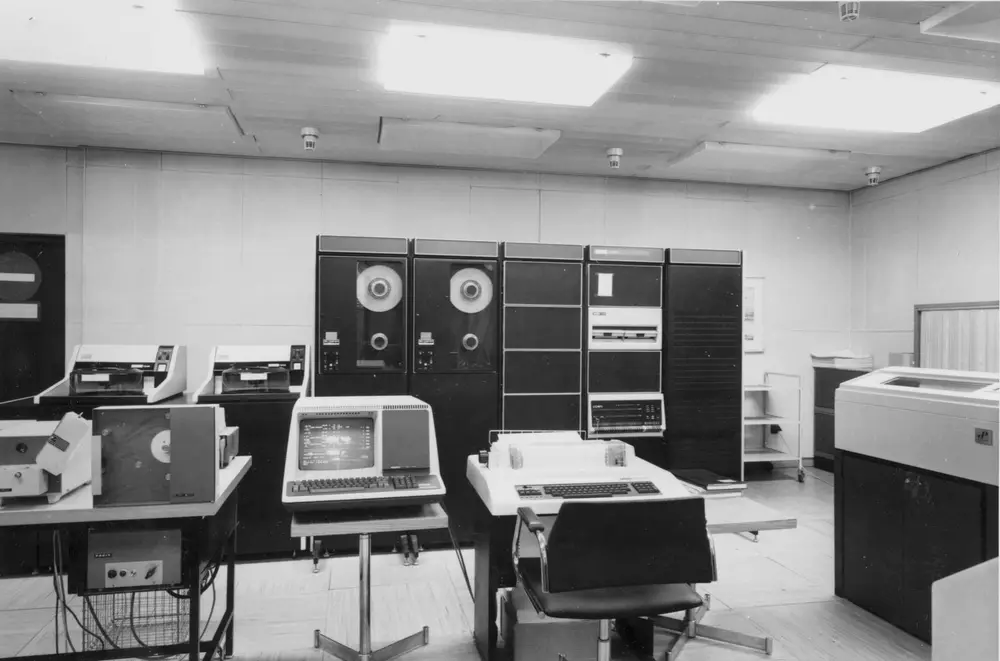
The Seventh Edition of 1979 was the last Bell Labs release to see widespread distribution before AT&T started selling Unix in earnest. V7 shipped with features you recognize instantly today: the Bourne shell (sh) by Stephen Bourne, with its for...do...done loops, case...esac constructs, here-documents and the 2> file-descriptor convention for error output; plus commands such as awk, make, lint, tar, touch, find and the portable C compiler.
V7 was so complete that it branched into two great lineages. On one side, AT&T’s commercial Unix that led to System V and influenced Solaris and AIX. On the other, the Berkeley developments that gave rise to BSD and, over the years, to FreeBSD, OpenBSD and NetBSD. Even MINIX, the system that inspired Linus Torvalds, drinks from this same tradition.
“You Are Not Expected to Understand This”
No anecdote captures the character of that code better than a comment in the V6 kernel, sitting in the process context-switching routine: /* You are not expected to understand this */. The code relied on a peculiar quirk of the PDP-11 C compiler when saving registers, it broke when ported to other machines, and it had to be redesigned in V7.
Ritchie later clarified that the line meant something like “this won’t be on the exam,” not an arrogant challenge. The funny part is that even the authors didn’t fully understand the code. It now ranks among the most famous source-code comments in the history of computing.
The Legacy
V6 and V7 were tiny by modern standards, yet they planted the seeds of everything: the hierarchical file system, pipes, small tools that do one thing well, the programmable shell and the Unix philosophy itself. Every time you open a terminal on macOS, Linux or any BSD, you are touching, distantly but directly, that Bell Labs code.