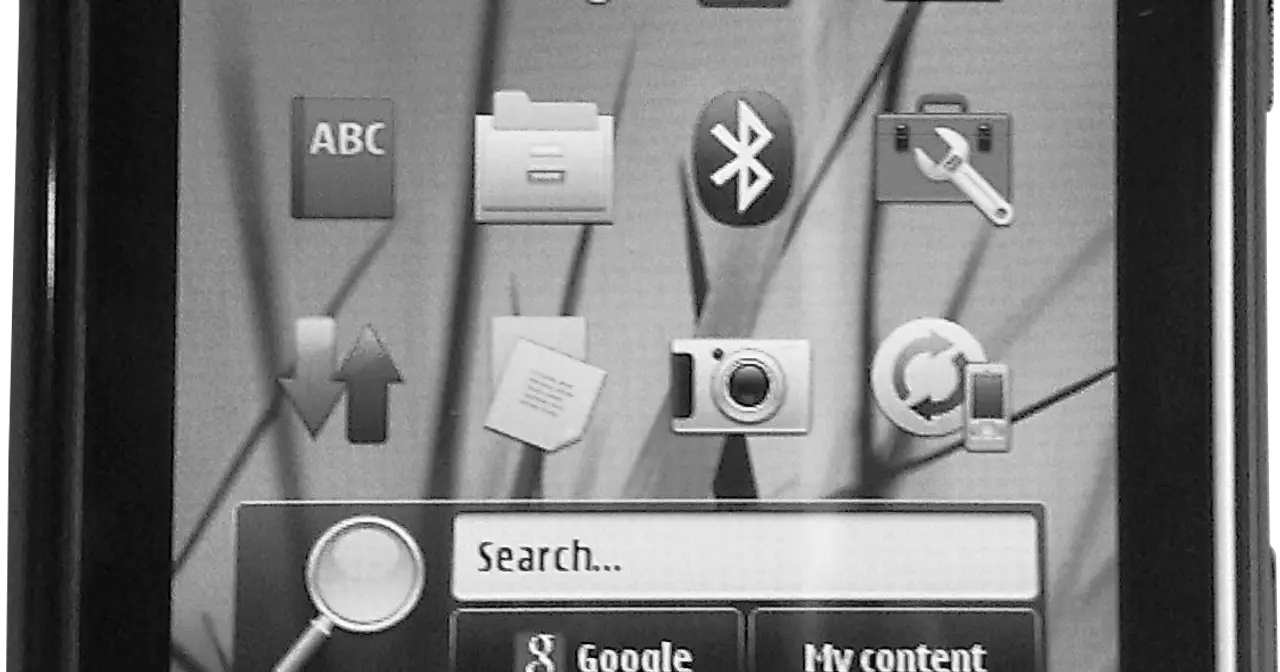
Long before the iPhone and Android carved up the world, one operating system sat in the pockets of half the planet: Symbian OS. For much of the first decade of the 2000s it was the undisputed king of smartphones, and it owed that mostly to Nokia. Here’s where it came from, how it grew, and why it eventually faded away.
From EPOC to Symbian: the Psion roots
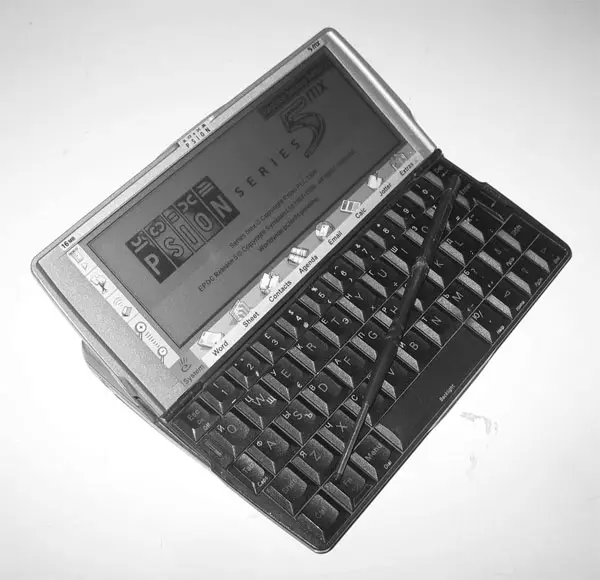
Symbian’s seed wasn’t planted by a phone company. It came from a maker of pocket computers. Psion, founded in London in 1980, developed an operating system called EPOC for its electronic organisers (PDAs). The 32-bit version, EPOC32, debuted in 1997 on the legendary Psion Series 5, a PDA with a physical keyboard that still has devoted fans today.
In June 1998 everything changed. Psion Software became Symbian Ltd., a joint venture between Psion and the leading phone makers of the era: Ericsson, Motorola and Nokia. EPOC was renamed Symbian OS, and the platform we would come to know was formally born.
The first smartphone and market conquest
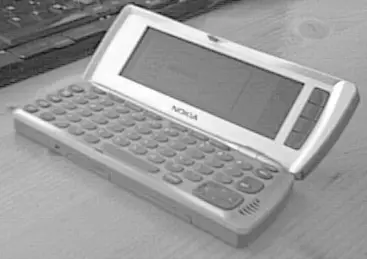
Symbian OS reached the market in November 2000 aboard the Nokia 9210 Communicator, a kind of pocket laptop with a lid that opened like a book. From there the system expanded at a dizzying pace alongside Nokia.
The secret to its success was that Symbian was an operating system core, with different interfaces layered on top. Each manufacturer could build its own visual shell. By 2006, Symbian held roughly 67% of the global smartphone market, a share that sounds like science fiction today. Next to that, rivals such as Palm OS and Windows Mobile were minor players.
The platforms: S60, UIQ and MOAP
Symbian OS on its own shipped without a user interface; it needed a platform layered on top. Three big ones emerged:
- S60 (formerly Series 60): created by Nokia in 2001 and launched in 2002 on the Nokia 7650. By far the most popular, it was also used by Samsung and LG.
- UIQ: aimed at pen-based touchscreens, developed by UIQ Technology. Adopted by Sony Ericsson and Motorola.
- MOAP(S): a variant exclusive to the Japanese market, used by makers such as Fujitsu and Sharp.
That fragmentation cut both ways. It allowed plenty of device variety, but it made life harder for developers, who had to adapt their apps to each platform.
The EKA2 kernel and the leap to open source
Under the hood, the later versions ran on the EKA2 kernel (EPOC Kernel Architecture 2), a real-time core able to manage both the operating system and the phone’s own radio on a single processor. That efficiency explained the legendary battery life of Nokia handsets of the era.
In 2008 Nokia bought Symbian Ltd. for around €264 million and created the Symbian Foundation, a non-profit organisation. The goal was to open the source under the Eclipse Public License. In February 2010 Symbian officially became free software, one of the largest open-source projects of its time. The move echoes the philosophy that drives projects like the Linux kernel or historic systems such as MINIX.
Symbian^3 and the beginning of the end
The last major iteration was Symbian^3, released in 2010 as the successor to S60 5th Edition, by then fully open. It received the updates known as Anna and Belle in 2011.
But the ground was already shaking. In February 2011 Nokia, the only major company still backing Symbian outside Japan, announced it would adopt Microsoft’s Windows Phone 7 as its primary platform. Symbian was sentenced to a gradual wind-down.
In January 2013 Nokia confirmed that the Nokia 808 PureView (2012), famous for its 41-megapixel camera, would be its last Symbian phone. Support shut down entirely on 1 January 2014, when uploading new apps to the store was no longer possible.
Trivia and legacy
- The Nokia 808 PureView didn’t just close an era. Its 41 MP sensor was a benchmark in mobile photography for years, proof that Symbian could fight on technical merit right to the end.
- The idea of a system core separated from the interface, something we now take for granted, was one of Symbian’s great architectural wins, comparable in ambition to systems like QNX or BeOS/Haiku.
- Symbian is a reminder that dominating a market does not guarantee surviving a paradigm shift, just as happened to OS/2 or NeXTSTEP in the world of computers.
Symbian no longer powers a single screen, but its mark remains: it was the system that taught us a phone could truly be a pocket computer.