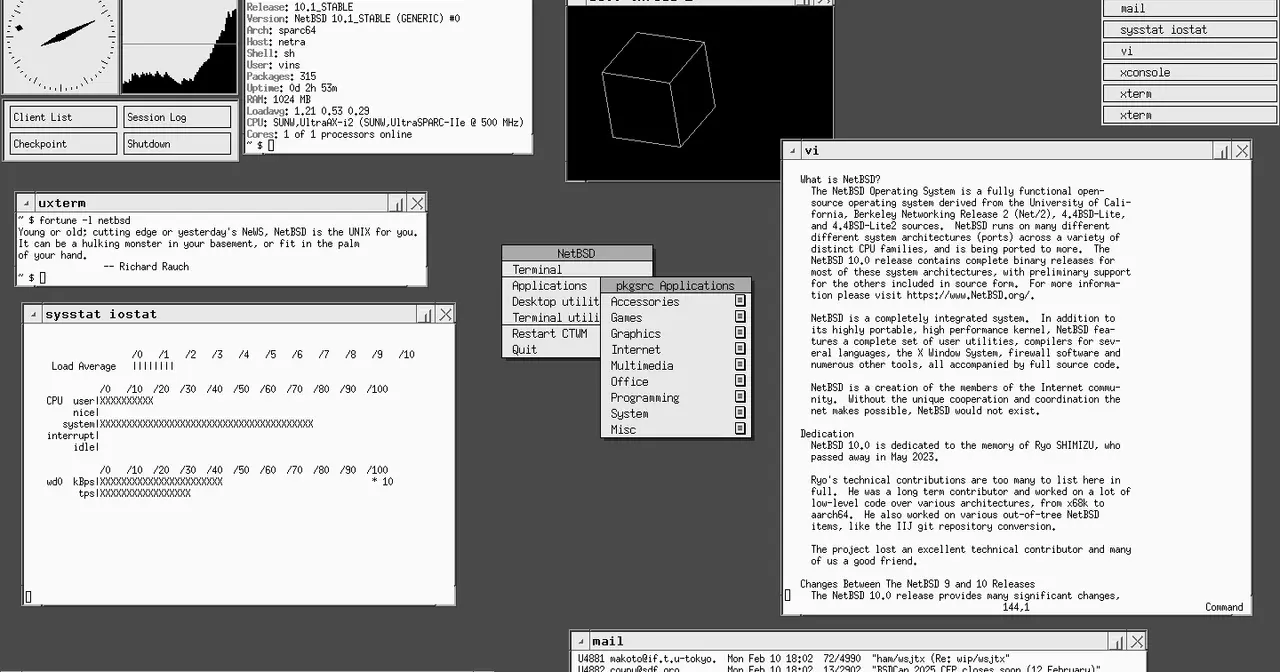
The NetBSD Project has released NetBSD 10.1, the first maintenance update of the 10.x branch, officially launched on December 16, 2024. It consolidates the stable line that started with NetBSD 10.0 and ships hundreds of bug fixes, new device drivers and security improvements gathered during the development cycle.
Key highlights
- New x86 hardware support: NetBSD 10.1 adds compatibility with AMD Zen 5 CPUs, plus specific fixes for Ampere processors and improvements to x86 virtualization.
- RAID improvements: the RAIDframe subsystem now handles hot removal of components and offers a simpler command-line configuration, which makes storage administration easier.
- More network and USB drivers: support arrives for the Realtek E2600 Ethernet, TP-Link USB adapters and various serial devices, so compatibility with modern equipment widens.
- Virtualization and ZFS: ZFS performance on Xen has been tuned, and the random number generator now reseeds automatically when a virtual machine is cloned. That matters a lot in cloud environments.
- Network interface protection:
bridge(4)adds an isolation feature similar to “protected-port”, handy for segmenting network traffic. - Strengthened security: the SSH daemon patches the CVE-2024-6387 vulnerability,
libarchiveis updated to version 3.7.7, and Mozilla root certificates are refreshed.
What is NetBSD?

NetBSD is a free, Unix-like operating system descended from the Berkeley BSD branch, famous for its motto “Of course it runs NetBSD”. What sets it apart is portability: it runs on a huge variety of architectures, from x86 and ARM servers to embedded hardware and vintage machines. Its clean, well-documented design makes it a fine choice for systems developers, researchers, embedded environments and anyone who values stability and code consistency.
If you want a solid, maintained system, NetBSD 10.1 is the release we’d point you to. You can review all the technical details on its entry in our directory: NetBSD.