Your phone, your laptop, the servers delivering this very page: almost everything you touch every day descends, one way or another, from an operating system born more than half a century ago. Its name is UNIX. That’s not nostalgic exaggeration from old sysadmins. It’s quite literally the family tree of modern computing. And it all started with a handful of engineers, a machine nobody wanted, and the urge to do things differently.
1969: the year that changed everything
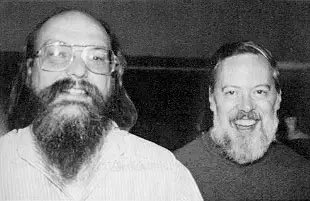
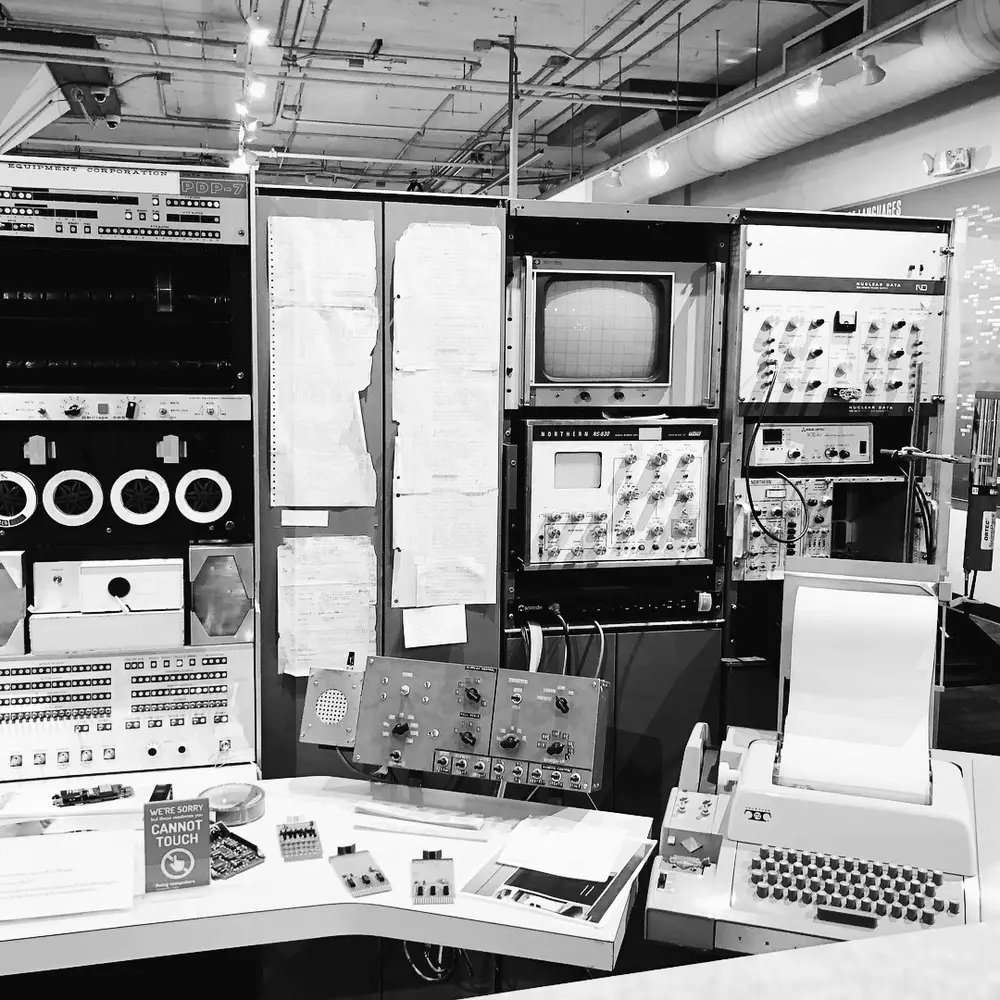
In 1969, at AT&T’s Bell Labs, Ken Thompson used a stretch of free time to write a simple, elegant operating system. He built it on a barely used PDP-7 minicomputer, hand-coding a file system, a process scheduler and a rough command interpreter in assembly language. Dennis Ritchie joined soon after, and the two of them laid down the foundations for everything that came next.
The name itself is a joke. The team had just come off Multics, an ambitious project that collapsed under its own weight. Brian Kernighan suggested Unics as a pun, and over time it settled into Unix. The same year humans walked on the Moon, the software that would quietly run computing for decades was being born.
The UNIX philosophy: do little, but do it well
What really set UNIX apart wasn’t the code, but a philosophy that holds up just as well today as it did then. Doug McIlroy, another Bell Labs pioneer, boiled it down to a few ideas that anyone who has ever opened a terminal will recognize at once:
- Write programs that do one thing and do it well.
- Make programs that chain together and cooperate, feeding the output of one into the input of the next through pipes (
|). - Everything is a file: devices, processes and data are all handled with the same tools.
That combinable simplicity is why typing cat file | grep error | sort | uniq still feels natural half a century later. UNIX never handed you monolithic giants. It gave you small parts and the freedom to bolt them together however you liked.
C: the language that made UNIX immortal
To write UNIX, Dennis Ritchie created the C language around 1972. Then, in 1973, the team took the decisive step and rewrote the UNIX kernel itself in C rather than assembly. For the time it sounded like heresy, since everyone assumed a serious operating system had to be written in assembly. It changed history anyway.
The payoff was enormous. Written in a high-level language, UNIX became portable. Moving it to a new machine no longer meant rewriting it from scratch; you just recompiled the code. C, by the way, is still one of the most widely used languages on the planet half a century later, and it sits at the heart of the Linux kernel and nearly every system that matters today.
The tree that grew from UNIX
By the late 1970s UNIX was already moving through universities and corporations. Version 7 (1979) was the last major release of the research line, and from there the tree split into two great lineages that shaped the decades to come:
- The commercial AT&T branch: System III (1982) and then System V (1983), which gave rise to enterprise UNIX systems like Solaris, IBM’s AIX and HP-UX.
- The Berkeley branch (BSD), born at the University of California, which evolved into the modern FreeBSD, OpenBSD and NetBSD. Through this branch, by way of NeXTSTEP, UNIX’s DNA reached macOS and, with it, iOS and hundreds of millions of devices.
So that all these variants could understand one another, POSIX appeared, the standard published in 1988 that defines what it means to be “UNIX-compatible.” And here comes the most famous guest of all: Linux. Linus Torvalds’ kernel contains not a single line of original UNIX code, yet it is a UNIX-like system that copies its design, its commands and its philosophy. From it descend Debian, Ubuntu, Fedora and the rest of the distributions you’ll find across this directory.
A legacy that never expires
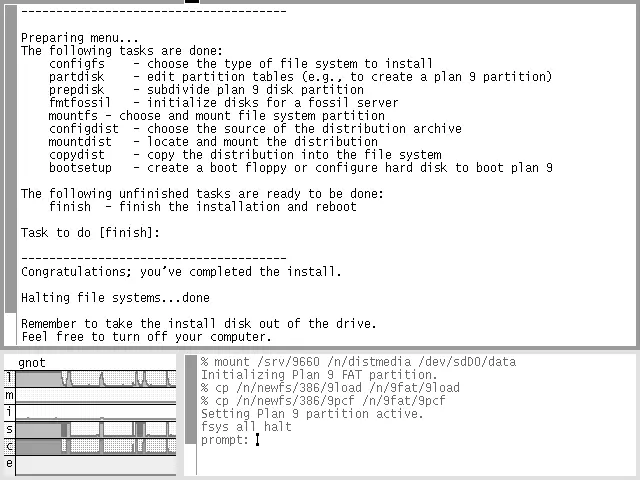
The same authors tried to outdo their own work with Plan 9, an experimental successor that pushed “everything is a file” to its absolute limit. It never caught on commercially, but it left behind things we use daily without noticing, such as the UTF-8 encoding (created by Ken Thompson and Rob Pike) and the /proc file system.
That is UNIX’s real monument: not a product you can buy today, but an invisible grammar. Every time you open a terminal, chain commands with |, spin up a server or type ls, you are speaking a language designed in 1969. UNIX isn’t just history. It’s the quiet foundation the digital world still runs on.