Hardly any Linux distribution is as instantly recognizable, inside and outside the security world, as Kali. Its blue dragon shows up in TV shows, documentaries, and cybersecurity classrooms across the globe. But before Kali came BackTrack, and before BackTrack there were two pioneering projects that laid the foundations of modern penetration testing. Here is how a niche tool became the de facto standard for ethical hacking.
The origins: WHAX and Auditor Security Collection
The story starts in the mid-2000s, when several security-focused distributions lived side by side. Two of them stood out. One was WHAX, a Slax-based distribution built by security consultant Mati Aharoni. The other was the Auditor Security Collection, a Knoppix-based Live CD that Max Moser created, bundling more than 300 tools in a remarkably accessible layout.
Keeping two parallel projects with nearly identical goals made little sense. So on May 26, 2006, both teams pooled their efforts into a single project. That union gave us BackTrack.
BackTrack: the birth of a reference (2006-2012)
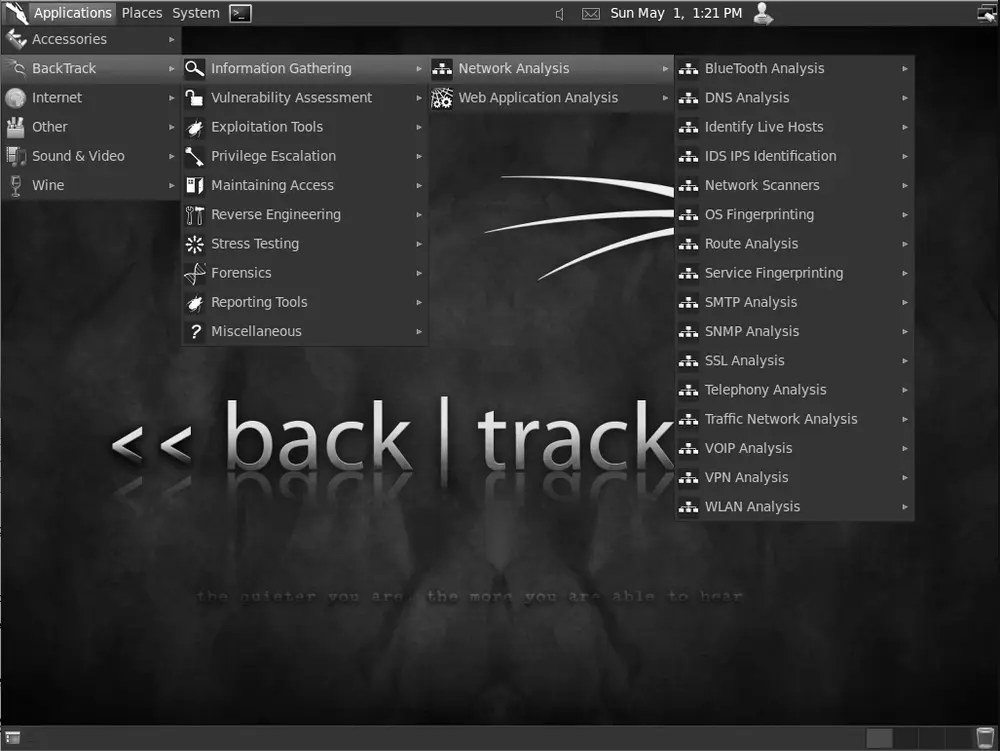
BackTrack was built as a portable, bootable live platform for penetration testing, digital forensics, and security auditing, all without installing anything on the hard drive. That “plug in the USB and get to work” approach made it hugely popular among professionals and enthusiasts alike.
Over six years, BackTrack grew release after release. Its tools fell into clear categories: information gathering, vulnerability assessment, exploitation, privilege escalation, reverse engineering, forensics, and stress testing, among others. The last major release, BackTrack 5 R3, landed on August 13, 2012, built on Ubuntu Lucid LTS and available in GNOME and KDE flavors.
Even so, BackTrack carried deeper problems. There were no continuous updates, so users had to upgrade by hand, which made keeping tools current a chore. Package management was inefficient and the filesystem ignored established standards, complicating maintenance. The Offensive Security team knew it needed something sturdier.
The rebirth: Kali Linux arrives in 2013
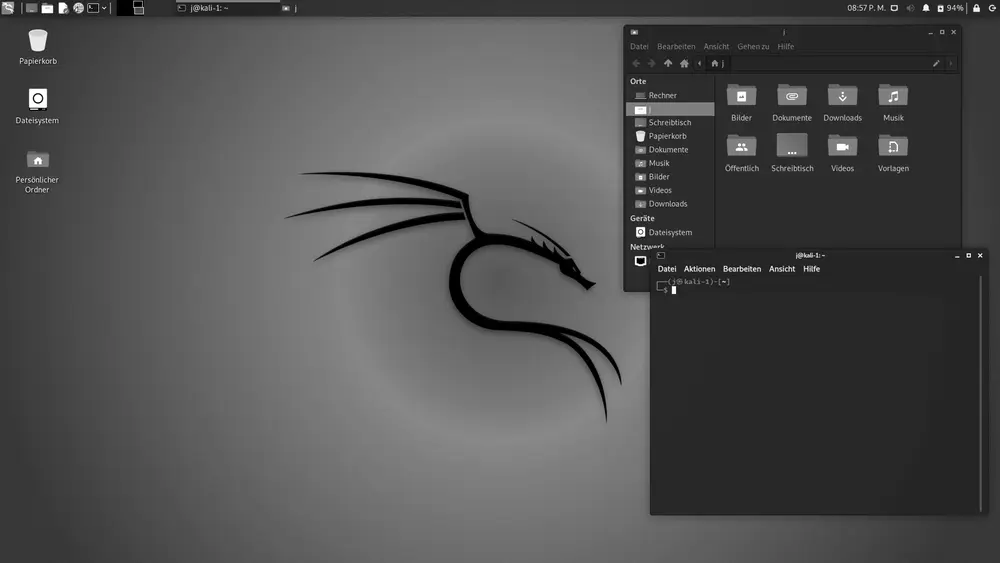
On March 13, 2013, Offensive Security introduced Kali Linux 1.0, codenamed “moto”. This was no plain BackTrack update; it was a complete rewrite from the ground up. Mati Aharoni and Devon Kearns led a sharp turn: drop the Ubuntu base and rebuild everything on top of Debian.
The move paid off. By basing Kali on Debian, the team inherited a solid package system, synchronized repositories that smoothed patches and updates, and full compliance with the Filesystem Hierarchy Standard (FHS). Kali also switched to the rolling release model: rather than waiting for big versions, tools update continuously. Another key addition was support for ARM architectures, which opened the door to boards like the Raspberry Pi.
Hundreds of tools in a single distribution
If anything defines Kali, it is its arsenal. The distribution ships with hundreds of preinstalled, ready-to-use security utilities. The essentials include the Metasploit Framework for exploitation, Nmap for network scanning, Wireshark for traffic analysis, and Aircrack-ng for wireless network auditing.
Bringing all those tools together in a coherent environment is exactly what turned Kali into the industry standard. Rather than installing and configuring each utility on its own, the professional gets a complete lab from the very first boot. Its Debian lineage has also shaped other security distributions: Tails and Qubes OS share that same Debian root, though they take very different privacy approaches.
Modern evolution: NetHunter, desktop, and maturity
Kali has not stood still either. In late 2019 it swapped its default desktop from GNOME to Xfce, chasing a lighter, more efficient experience. And with version 2020.1 it dropped the controversial default root-user model and moved to a non-privileged user, like any modern distribution. Call it a nod toward security and normalization.
Kali NetHunter deserves its own mention: the Android-based mobile penetration testing platform. It comes in several editions, from the one that needs rooted devices with a patched kernel to the Rootless version you can install on stock phones via Termux. With it, Kali’s power fits in your pocket. And for anyone after lightweight desktop alternatives, options like Alpine Linux or Arch-based environments coexist today alongside the Kali world in technical circles.
From niche tool to cultural icon
Kali Linux’s path is the story of an idea that knew how to mature. What began as the merger of two Live CDs in 2006 became, thanks to the bet on Debian and the rolling model, the most recognized security distribution on the planet. More than a decade after that first “moto”, Kali stays free, open, and maintained by Offensive Security. It reminds us that the best tools are not always born perfect: they are built on the wins and missteps of those who came before, just as its predecessor BackTrack proved.